Establishing a biotech start-up and growing mycelium in Ivano-Frankivsk is quite a bold idea. But the idea becomes an actual product when you have a goal and know what you are working for. Meet the story of Marta Kondrin – co-founder of the biotech startup Mycelia Tech, which studies, researches, and works with mushroom mycelium to create an ecological material.
By combining entrepreneurship and biotechnology, Marta aims to influence the fashion industry and use material that does not harm the environment and the people who create it. Marta also co-founded the leather goods workshop “Shuflia”; new ecological materials for production are one of the company’s strategic directions.
*Mycelium is the vegetative body of mushrooms; simply put, it is mushroom spores that help mushrooms reproduce.
What Marta’s team is working on
Marta, you are a co-founder of a biotech startup, and many complex processes and technologies must be involved. How to describe in simple words what you are working on?
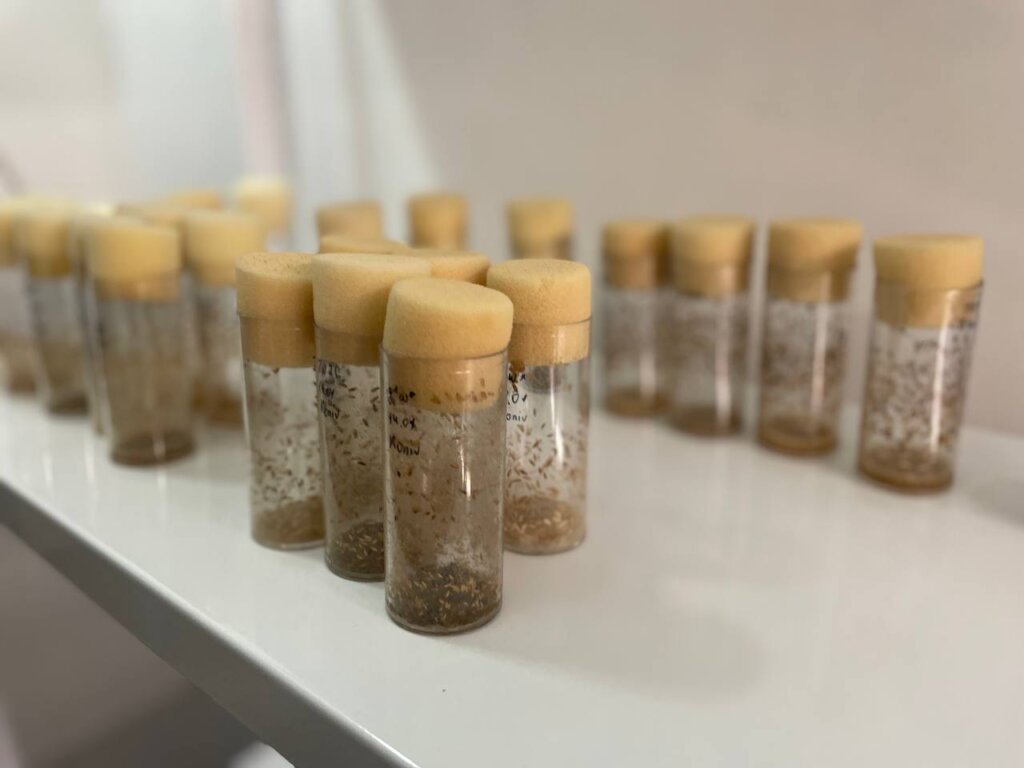
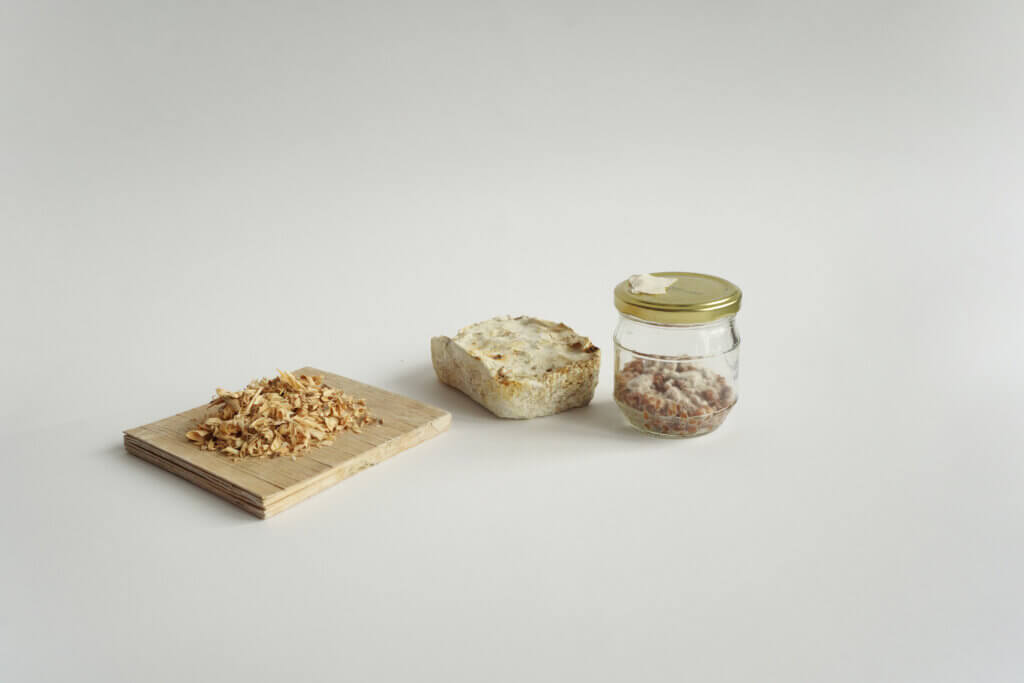
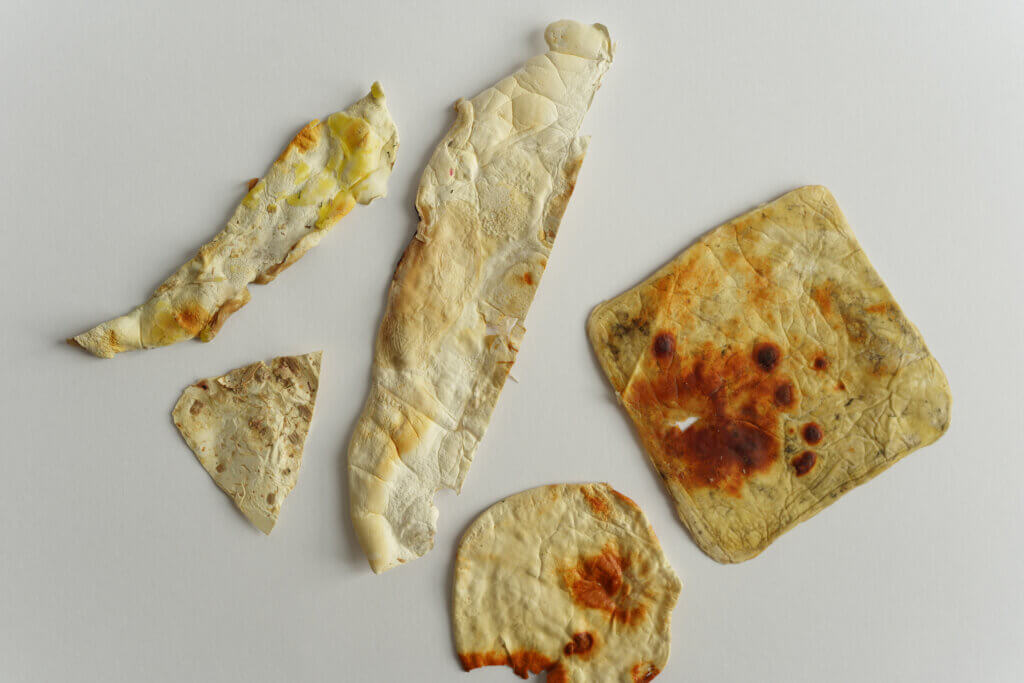
We research and work with mushroom mycelium to create alternative materials from them. In particular, we are working on replacing skin with mycelium because mycelium is very similar to this material in terms of its structure, growth intensity, and elasticity. Also, we are considering the possibility of creating entirely new materials and forms from mycelium because we believe in materials that are made without harming the environment: animals, plants, and people. For this, we use the circular economy approach, which uses the maximum amount of waste from agricultural production, woodworking, etc. We create a nutrient medium where we grow mycelium from them in laboratory conditions, particularly here at Promprylad.
Why did you choose mycelium? What are its features as a material?
As soon as we started studying mycelium, we realized it was compelling. Growing mycelium is a reasonably inexpensive and straightforward process in terms of the resources it requires. Mycelium has a structure of fibers, which makes it as similar as possible to skin, both in structure and to the touch. Also, what is essential is that mycelium can create solid bonds and be involved even in building materials or replacing plastic.
How did the idea come about?
There are many factors involved. When I lived abroad, I got to know the founders of a company that grows mushrooms and materials from them. They introduced me to this field. I was fascinated by the idea, and the fact that I was already an entrepreneur who made materials from leather pushed me to study this issue further because we want to create products from leather and other more ecological materials.
How does the “New Economy of Ivano-Frankivsk” help, and what are your project’s benefits and potential?
In fact, the project has helped us in many ways. First, it is an incredible networking, a circle of like-minded people who want to do something new and valuable for the city’s economy and the country. Also, great connections with science: networking workshops where you can learn and exchange knowledge. Secondly, consulting for business projects which have been used repeatedly. Thirdly, solid practical part. It helps us to experiment, procure materials, and have a platform for experiments so that we can continue in the direction of creating an MVP.
And what’s next after MVP?
We see it as a business project. Our MVP is a material that will pass all the tests. We will involve experts to evaluate the quality. Immediately after that, we will start making products for the general public to show consumers these materials and prove that they are no worse than leather. I need to remove mycelium from the status of exhibition material so that it does not seem inaccessible and can only be used in laboratories. I want everyone to have the opportunity to interact with the mycelium. Therefore, we want to manufacture ready-made products for use immediately.
In business plans, are you more inclined to develop a line of products or a specific product?
At the moment, I see my project more as developing a line of products, but I am open to cooperating with designers with whom we can jointly create a new product. We are currently working on creating a website where we will sell finished products. Interestingly, we noticed that much of the waste remains during production, which we also use. In the future, we would like to have the role of a structure that creates and supplies material to other organizations that make products from it. We also understand that mycelium is a somewhat unpredictable material that does not grow according to a formula; we have already changed one growing formula to another, more suitable for our climate, so openness and flexibility are the main principles in our work.
What were the most significant difficulties in experiments with work?
Unfortunately, the technology of working with mycelium is a rather closed field. Very little information is freely available, so we are starting from scratch. The lack of qualified specialists in this field also plays a role; there are practically none. Working in this field requires a lot of patience because the result does not come quickly; you need to work a lot.
You received several grants this year. Can you tell us more about them? Perhaps there was other financial support – investments, for example?
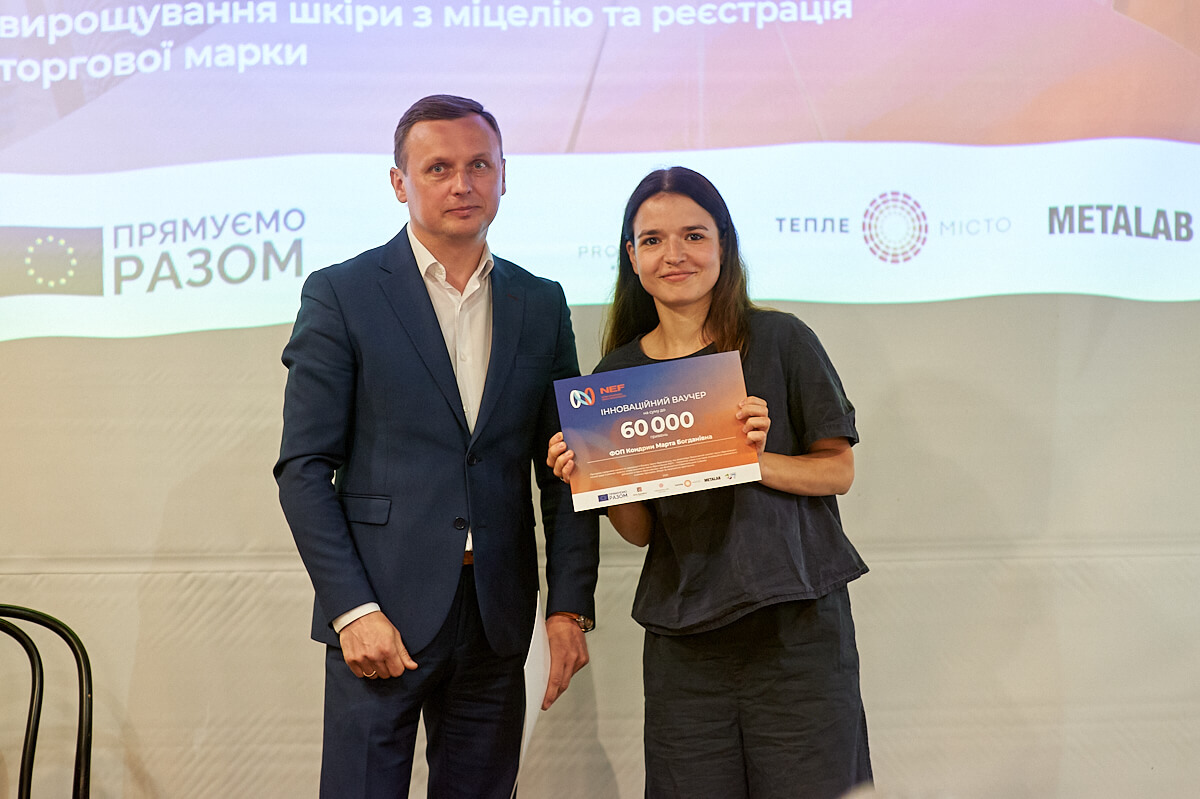
Yes, we received grants for which we are very grateful: a grant from the Kyiv School of Economics, IOM, and Diya.Business. This assistance allowed us to employ people, buy consumables, get equipment, and compensate for transportation.
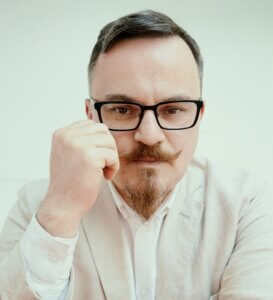
Mycelia Tech – Mycelia Tech is an example of knowledge-intensive technological product innovation because creating a new material from mycelium requires scientific knowledge (biological processes) and technological know-how (own approach to production or growing material). Mycelia Tech will need to do patent exploration to determine its own technology’s novelty and be able to patent the technology for critical markets. These are also innovations at the level of a business model because Mycelia Tech aims to become a biomaterial manufacturer for various industries – primarily a skin substitute – this is not just an innovation of Shuflia (a manufacturer of leather goods) but a full-fledged technological startup (a separate company).
Volodymyr Vorobey, head of the economic development agency PPV Knowledge Networks.
How to become a makerspace resident
The updated makerspace has opened, to become a resident or learn more – apply using the link below
Leave a request