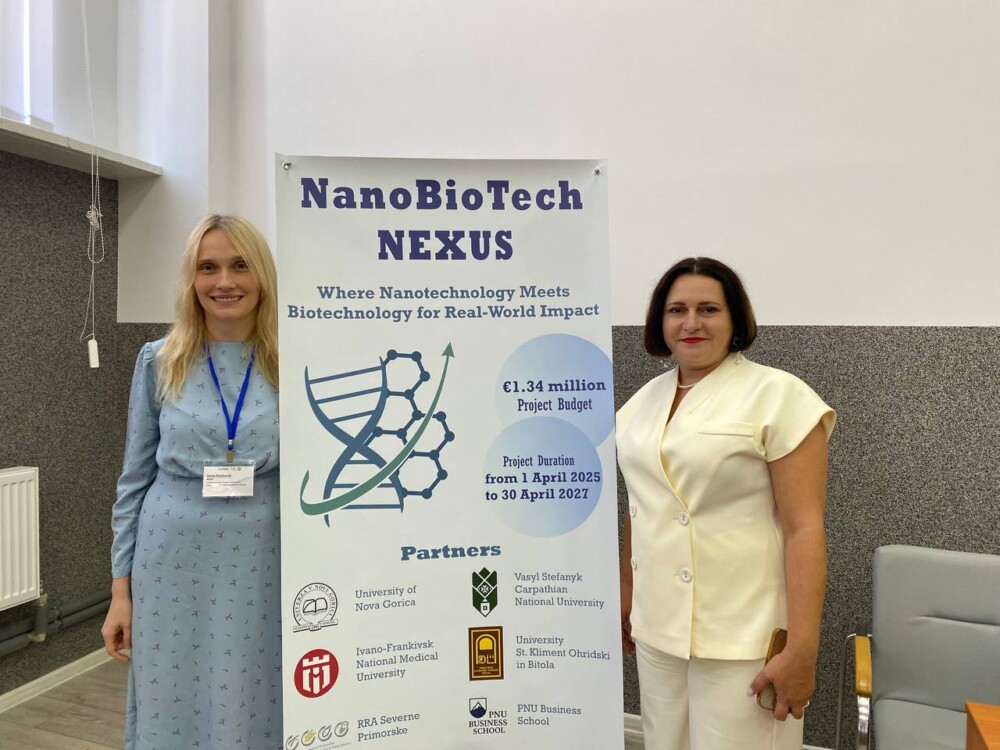
On December 1, team PPV economic development agency held the third and final seminar on innovation management on the topic of Intersectoral interaction for business innovation. Scientists, entrepreneurs, and managers attended the event to discuss the formats of interaction between business and science and innovation infrastructure and discuss what institutions are needed for the innovation ecosystem of Ivano-Frankivsk.
In the first part of the seminar, they talked about the impact of innovations and the formats of interaction between science and business; during the second part, there was a discussion about the innovation infrastructure of Ivano-Frankivsk. The meeting was moderated director of the economic development agency PPV Knowledge Networks Volodymyr Vorobey.
Brief notes from the workshop have been prepared below:
- Innovation is primarily about interaction. Relationships between institutions and businesses are essential.
- Formats of interaction to create innovations: point (one-off orders, meetings), projects (research, commercial), networks (associations, working groups, committees, councils, platforms, groups), partnerships (cluster initiatives and clusters, thematic coalitions, technological platforms).
- Business-to-business interactions can also create innovative products without scientists.
- It is not only the university that needs to commercialize technology, but also businesses.
- Technological platforms for unifying universities and research centers from various fields are viral in Europe.
Impact of innovations:
- 1) Businesses—newly created (startups), growing (scale-ups), and mature (assets, processes). This stage requires finance, people, ideas, markets, infrastructure, expertise, and contractors.
- 2) Technology: There is an experimental stage (TRL-1, TRL-5 — technological readiness levels), demonstration stages (TRL-6, TPL-7), and commercialization stages (TRL-8, TRL-9). At these stages, the creation of technology requires mainly finance, ideas, markets, expertise, and contractors.
- 3) Product: prototype, small-scale production, serial production. This requires finance, markets, infrastructure, expertise, and contractors.
- 4) Policy: pilots (ideas), scaling (tools, programs), reforms (innovation systems). Implementation requires finance, people, ideas, expertise, and contractors.
The infrastructure needed to create innovation: research infrastructure (large equipment, sources of knowledge, archives or repositories, communication networks) and innovation infrastructure (innovation districts, towns, science and technology parks, technology parks, innovation parks, open workshops)
During the discussion, they discussed what types of innovative infrastructure are needed for Ivano-Frankivsk and how the existing one can be improved. All developments and conclusions from the discussion will be used for further work on the NEF project.