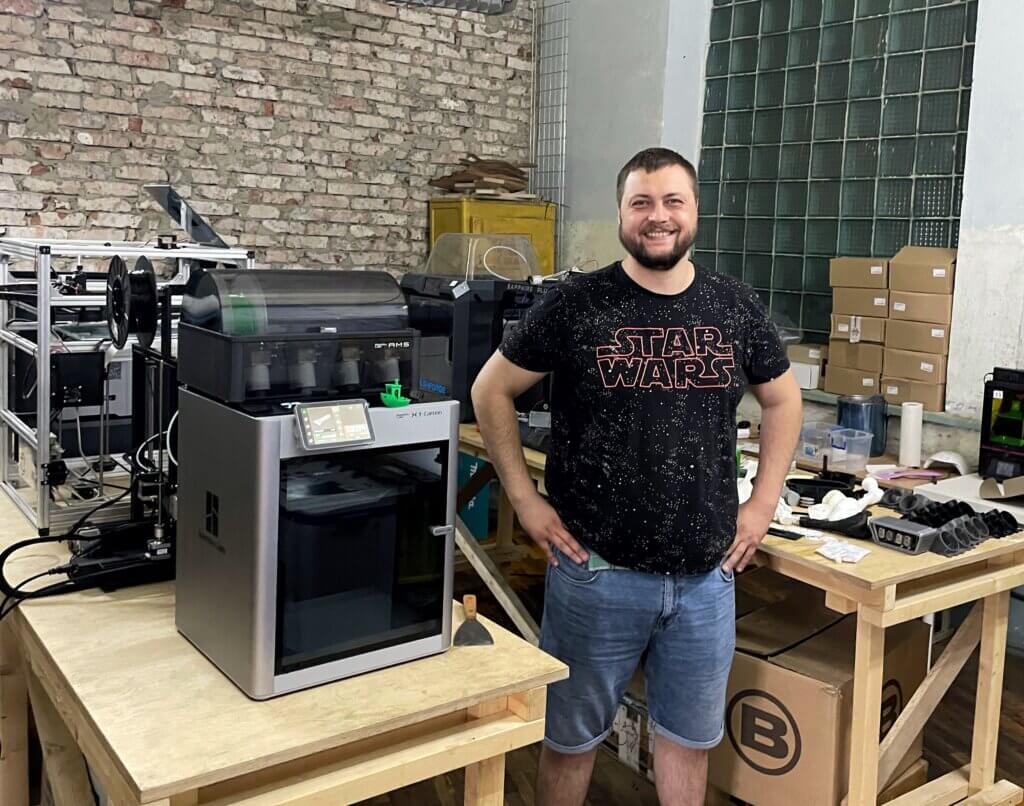
The 3D printing organization 3D Storm is located at Maker Space. It consists of two parts. In the first – mostly computers. In another darkened room with artificial lighting, there are 3D printers of various models.
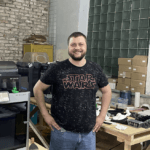
Anton Shelest, a doctor-radiologist in a children’s hospital, creates various 3D projects here and, in his free time, creates projects on 3D printers in the Maker Space.
Anton co-authors several patents and dreams of creating a powerful 3D farm in Ivano-Frankivsk with the latest equipment. Anton told how he came to 3D printing from medicine and worked on creating innovations in medicine by combining these two topics in his activity.
About Maker Space
I learned about Maker Space at Promprylad years ago. I have been following the project since its inception, but here in the Maker Space now, I am a new member (Anton has been a resident for about a year – NEF note)
First, I brought my equipment here; it’s about seven printers. Later, we organized a 3D farm with colleagues at the Maker Space; they also brought their printers there. That’s how we started printing here for various projects. Twenty 3D printers are currently working in the workshop. In my 5th or 6th year in university, I read an article in a medical journal about using 3D printing technology for individual surgical navigation in surgery.
From the 3D model of the bone, a special overlay is created for the part of the bone to be operated on, thus facilitating access for the surgeon with the help of special tools. I began to study this topic in more detail. I am currently working on various projects but am interested in medical projects.
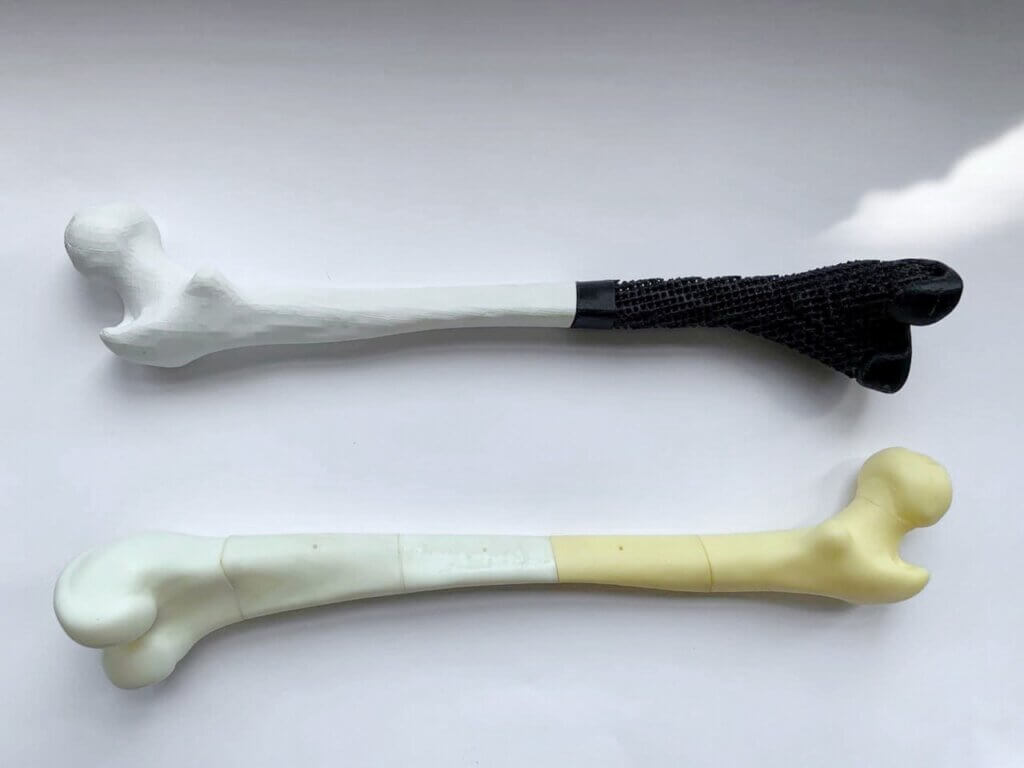
Anton shows a piece of 3D-printed bone with damage and an alternative solution for bone repair. The sample was printed to demonstrate a possible solution for replacing part of the bone to the patient.
Such operations are carried out mainly in Kyiv, and mostly cases through transferred oncologist bones, complex fractures, jaw-facial injuries, and bone malformations.
What else is being created here? There are special bone dummies for doctors, on which doctors train to perform operations. It is quite a complicated construction; it reproduces the bone and consists of two parts: a hard shell on the outside and a hollow one on the inside. Now, such dummies are bought abroad. After consulting Professor Vadym Sulyma, Anton thought he could make such dummies here. He has already developed a technology for making such a two-layer layout.
About patents and surgical navigation
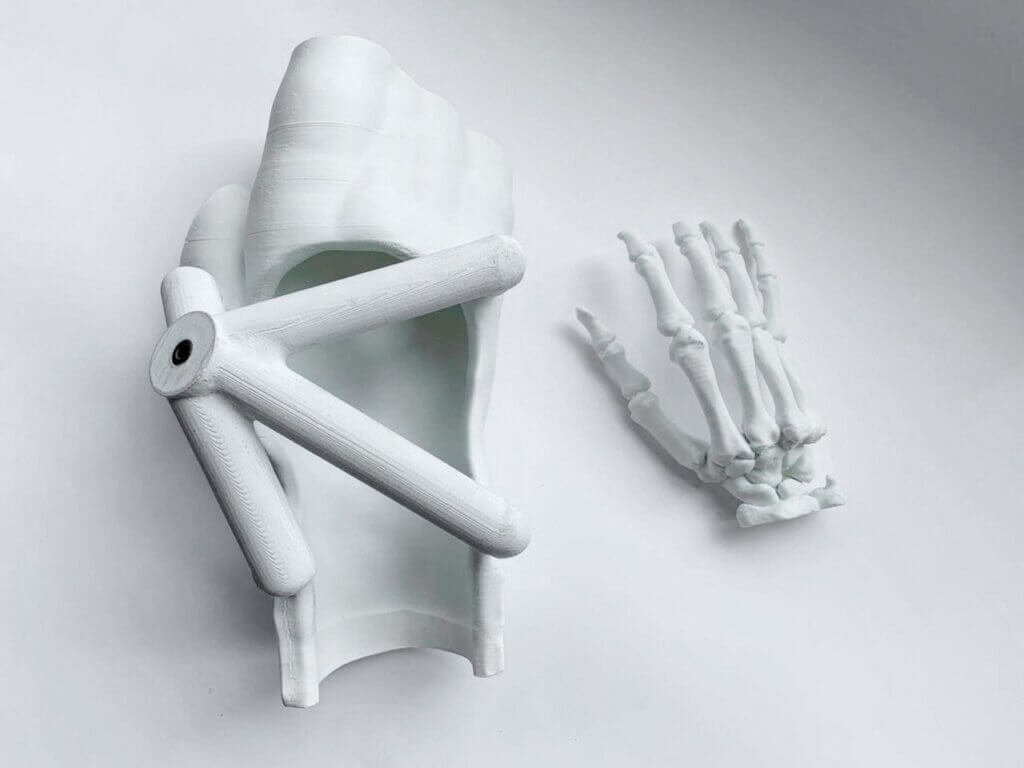
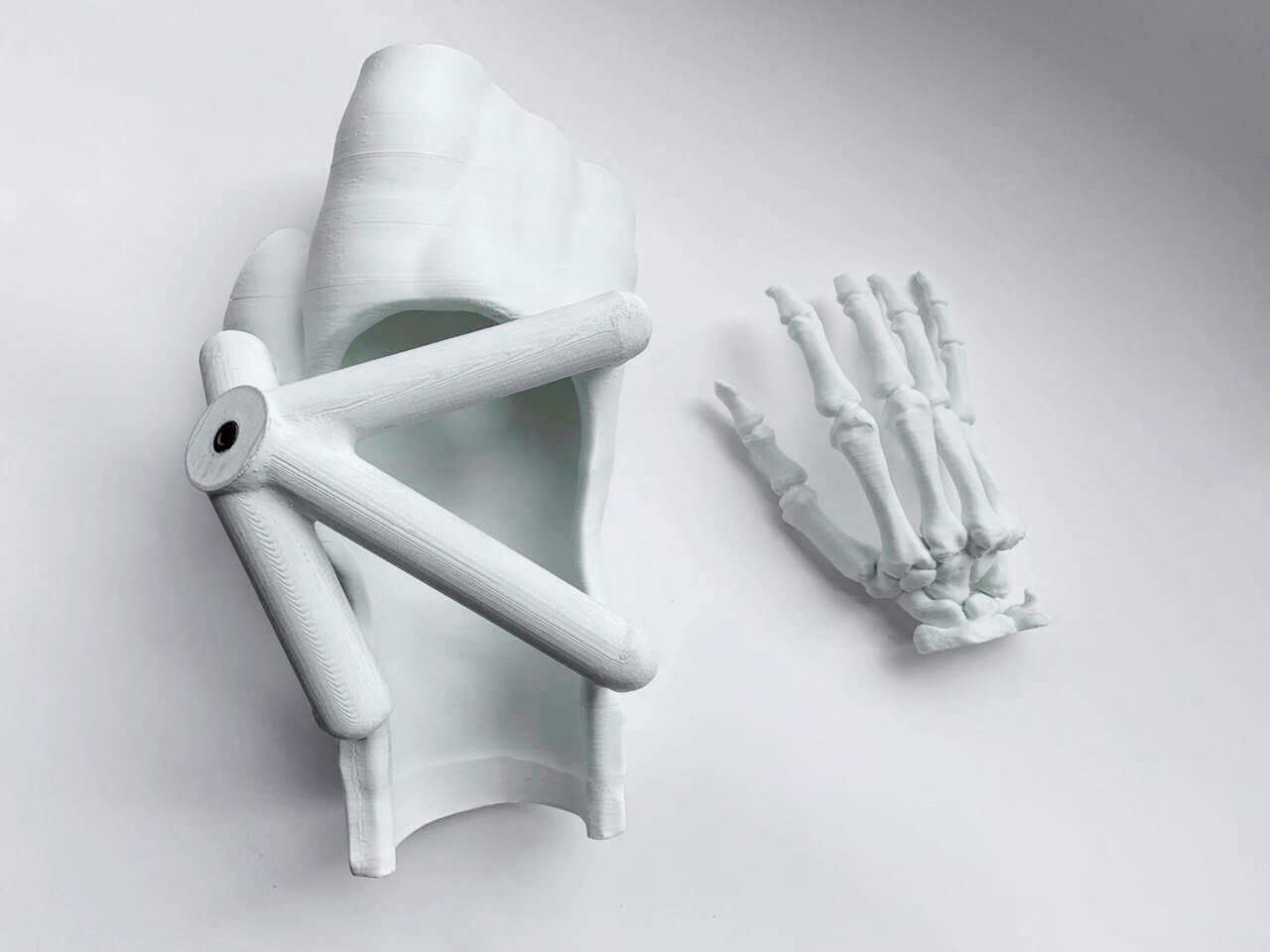
In Ivano-Frankivsk, with traumatology Professor Sulyma Vadym Stanislavovych, we developed a surgical navigation solution for one of the patients who needed to perform a delicate operation on the hand. Based on the CT scan data, I designed and printed a 3D model that exactly replicates the patient’s hand. The model served as a “glove” for fixing the hand. Through a special hole for navigating the surgical instrument in this “glove” the surgeon performs a delicate operation with minimal intervention and with minimal tissue damage. The operation was successful; I am most proud of this pilot project because it was the first validation that such operations could be implemented in Ivano-Frankivsk instead of going to Kyiv. I am also a co-author of several patents for such developments.
Anton talks in detail about photopolymer printing and how the technology generally works. It turns out that there are different types of printers. In some, a special resin is used as a material; in others, a plastic thread is used. Anton says that fused deposition modeling (FDM), which is the most common among such workshops, should move in the direction of using recycled plastic. Its place should be taken by selective laser sintering (SLS), which is of much higher quality but is not yet available for widespread use due to the cost of equipment.
Models are printed in layers. It takes about 40-60 minutes to print a part measuring 2*2*2 cm. You can print a model of almost any complexity. Restrictions may depend on the materials from which they are printed.
The first question that starts the production of a 3D model is where it will be used: is it an artistic or engineering product, will there be a load on it, and in what environment will the part be used? In Anton’s workshop, product prototypes were printed on a photopolymer printer for one of the product workshops within the framework of the NEF project.
Together with colleagues from Maker Space, we selected a fleet of printers for the updated space of the soon-to-be-opened Maker Space. In particular, the Bambu Lab X1 Carbon printer with an automatic plastic replacement system for 4 AMS coils arrived; two reliable and easy-to-use Prusa MK4s, two photopolymer printers with a complete set for processing photopolymer products, and a Shining 3D scanner. There are plans to build a 3D printer for ceramics and expand the possibilities with equipment for polymer laser sintering.
About the 3D workshop
The best 3D workshop is suitable for people who need to make something new or need to make a copy of something that cannot be found. We will certainly be helpful to designers, architects, and entrepreneurs who need to make a prototype before full-scale production or for small-scale parts production. For example, we created an original handle for a car that has long since been discontinued. To make such things, there is a bank of 3D models where you can download various projects, not to model them from scratch. There are paid and free layouts; the price can start from a few dollars.
We printed decorative wind turbines for a coffee shop. I modeled these propellers according to the designer’s project. There is no load on them; it is a decoration, so it was not difficult.
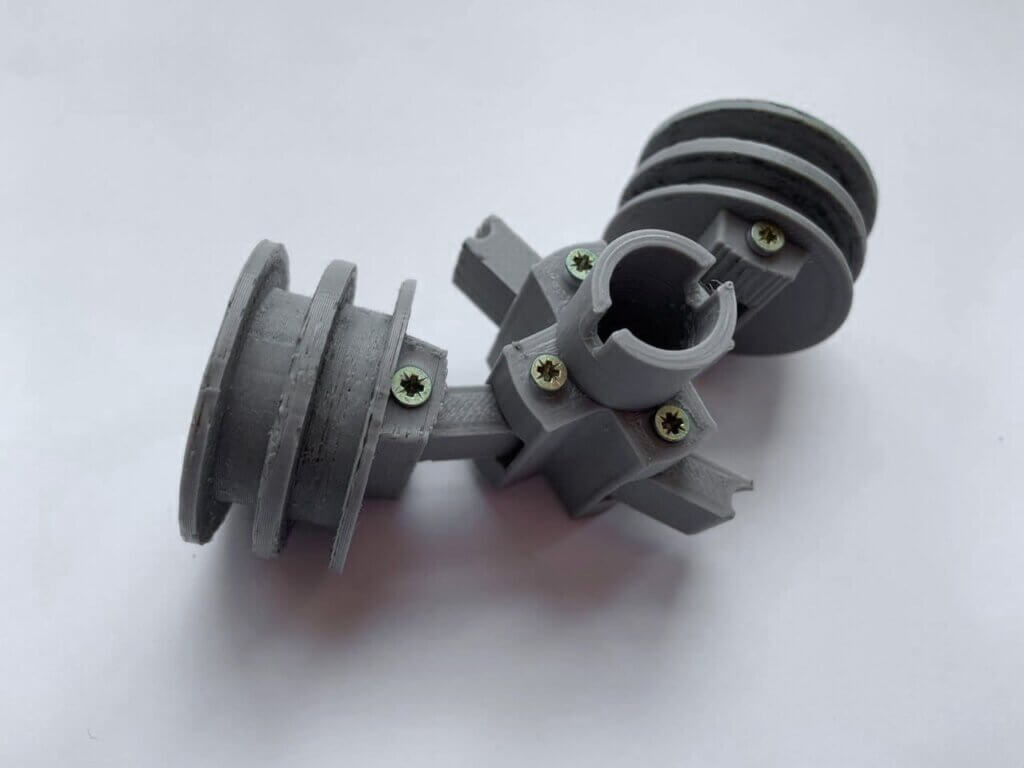
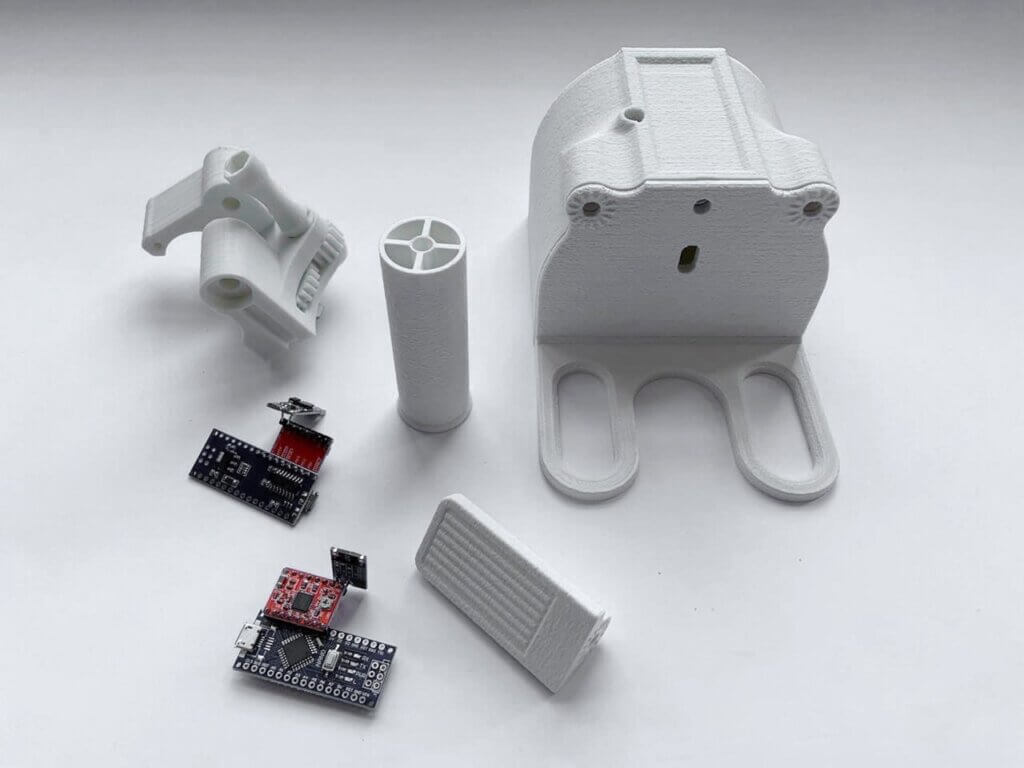
As for more complex engineering designs, we created piston groups for vacuum wound treatment devices. Many of these devices arrived in the form of volunteer aid to Ukraine. This is a special device that is used to treat wounds.
The piston group is the main spare part for such an apparatus, which creates negative pressure in the wound. My colleagues turned to me. These parts break because they are used intensively. We redesigned and improved some of these parts, and now they are replacement parts; everything works well.
We also do this type of project here.
About goals and development
Several projects are in the works; I cannot say anything about them yet. But in general, I want to develop in technologies, that is, work with new types of printers, for example, selective sintering of plastic or metals. Such a device works in Kyiv. Prostheses and implants for different body parts can be printed on such printers. There are individual implants that completely repeat the anatomical structure (for example, a pelvic bone implant can only be individual), and there are ready-made solutions. Some solutions can be made from special plastics, and some can only be made from special biocompatible metal alloys. I dream of such printers here in Ivano-Frankivsk.
Who would you recommend the Maker Space to?
First of all, these are engineers. There is a park of machine tools: milling machines, laser machines, lathes, 3D scanners, printers, and new equipment will arrive soon. Recently, the Maker Space team and I were selecting equipment for the updated Maker Space, and the new 3D scanner has already arrived; other equipment is still on the way.
Instead of looking for equipment to buy, you can come here and use it.
Here, you can close your requests from design to small-scale parts production, up to 100 pieces per month. Also, the preparation of the part for full-scale production at large capacities: you can create several iterations of the prototype and arrive at the final solution, which will go into production. Here are ideal conditions for that.
Maker Space allows designers and architects to create interesting interior details, engineering, or product solutions. Businesses can also apply – we have such a case.
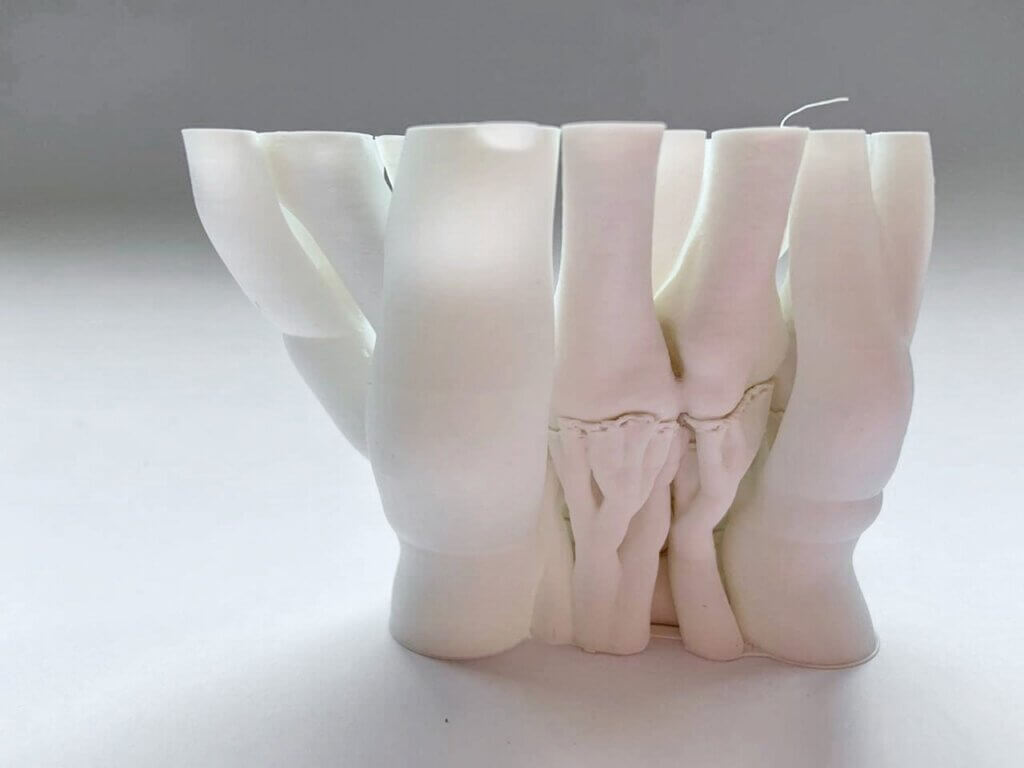
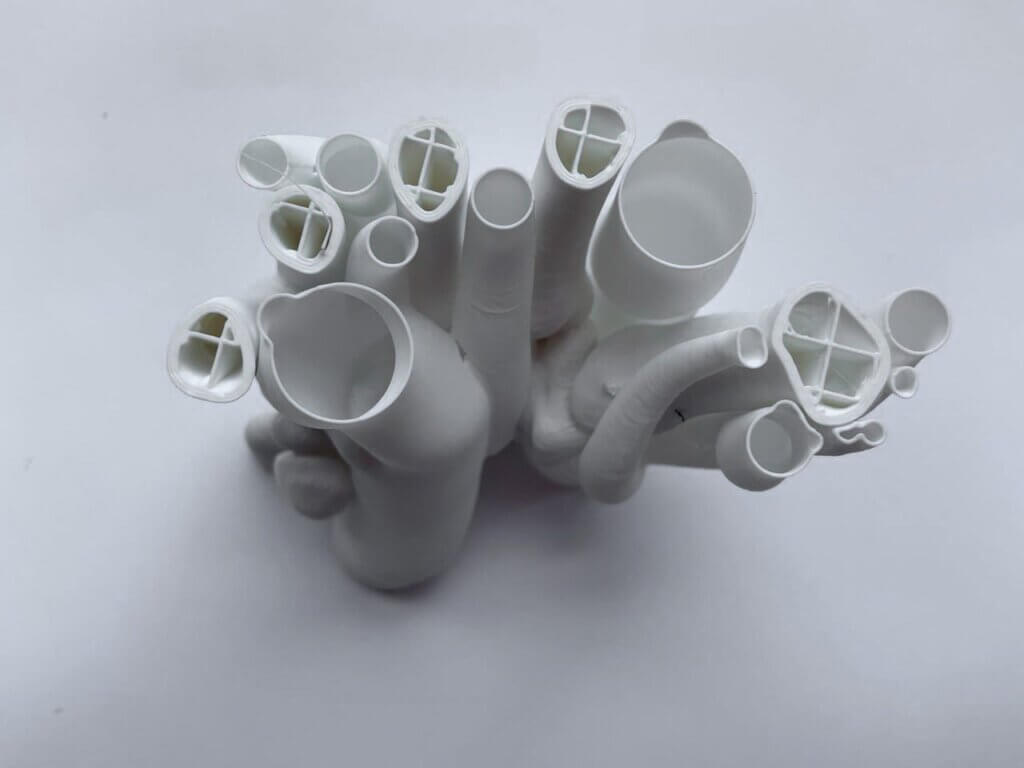
At the request of an acquaintance, Anton improved the technology and produced a product for the beauty industry. This special device greatly facilitates the work of masters with eyelash application. They plan to patent the development; the prototypes worked perfectly.
This product has great potential both in domestic and foreign markets.
About the value of Maker Space community
I won’t say anything new because that’s the general opinion at Maker Space. When I first arrived, I thought: Wow, this is great! I know everything about 3D printing, and here I have colleagues (residents of the Maker Space – NEF) who deal with metal, wood, and robotics; there a laser cutter lathes, and I can significantly expand my possibilities in projects by combining different materials. I can calmly approach my colleagues with questions, and they will advise me. They can also ask me for advice – and I will help. Once Pavlo came to me, he had a question about mechanics. We thought about and designed the solution together, and Pavlo took care of the implementation. This is how it works.
Maker Space is a community of qualified people, each of whom is a specialist in his field.